
Arguably the most significant Tarot deck in human history, this Renaissance work of art has inspired my writing on the fall of a great Milanese dynasty, as the cards commissioned by the Sforza patriarch himself perhaps once foretold.
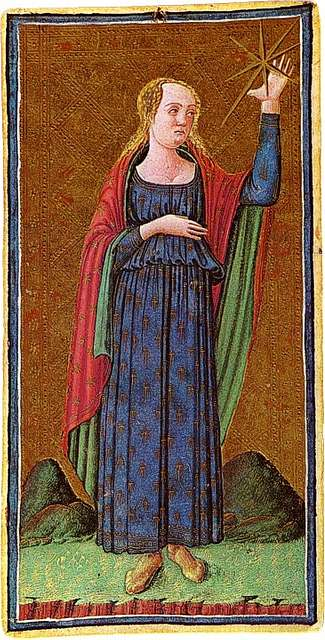
I Trionfi, the Tarot Deck, has been around since the 15th century, if not arguably earlier, and has been played by all levels of class throughout northern Italy. Originally a playing deck for every day life, Tarot soon became the tool for divination still used and beloved to this day.
The Visconti-Sforza deck is perhaps the most significant of all the decks. Commissioned in part by Francesca Sforza I with his own likeness, and the likeness of his family and friends sprinkled throughout the gold-gilded deck, this deck cemented what we now consider to be Tarot.
As a lover and third-generation Tarot reader myself (though interestingly this tie to Tarot comes not from my Italian side), it was a no brainer for me to explore the fall of the Sforza dynasty through the medium of their infamous Tarot deck. Combining divination with the superstition of replicating one’s likeness found in eastern cultures and religions, I retell the story of the family’s fall through a cursed Tarot reading of the famous commissioned deck.
How does The Hanged Man, with the likeness of the brutish womanizer Francesco I, not curse Francesco himself to his journey ahead? What good can come from the likeness of one’s Mistress being pulled next to the likeness of one’s wife? And how does the playing of the cards fair between nobility and the common labourer, and more importantly, how does it link their fates?
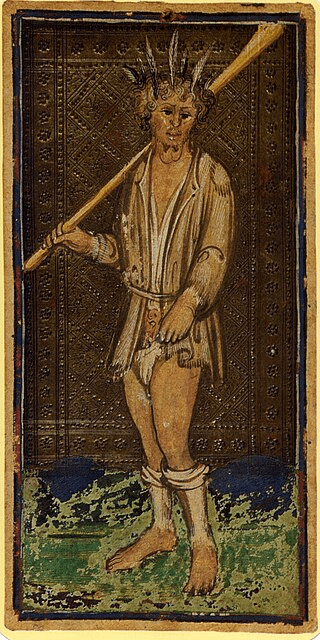
While we may never know what such games of Tarot foretold for Francesco Sforza, we do know his love of the occult and cosmos was passed onto his sons, as was his love of women, power, and tyranny. The Sforza men, though only three generations worth are considered in the dynasty, all went mad. They all died mysterious deaths. They all abused the women in their lives. And, they all allowed the French to infiltrate the great city of Milan. So how can we ever know for sure how the fated Tarot did, or did not, play into such a dynasty’s fall?
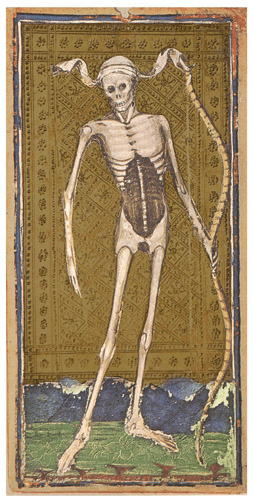
While power-hungry men never need the occult to propel their downfalls, in my retelling of the Sforza’s fall, the occult merely speeds things along. My story is inspired by not only this deck, but the art and culture of the Renaissance at this time in history in Milan, as well as the narration devices of Edgar Allan Poe’s The Fall of the House of Usher, which also inspired this work’s title, The Fall of the House of Sforza.
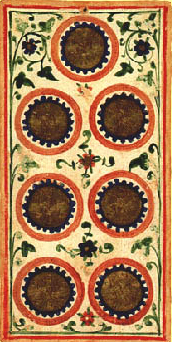
There is so much mystery to the Visconti-Sforza deck, such as the playing cards which were never again replicated in any historical or modern deck, like The Chariot, and the cards which remain missing to this day – The Tower and The Devil – without any historical evidence as to where they went or why. If you know even the smallest nugget of information on Tarot, you know both the Devil and Tower are notoriously ominous cards. Is it not plausible such cards went missing after a rather fatefully dreadful playing? Is it not more than coincidence that the son of Francesco I who obsessed over the stars are Tarot more, who in all rights should have never taken the throne, seeing he had many a brother and nephew ahead of him in line, held the seat of power until he went mad with self-inflicted grief, dying mysteriously in a dungeon far away? And who’s own son, the second born carrying the name of his grandfather, died childless after a short life steeped in his own mystery and tragedy of the likes of Poe’s gothic tales? (cue the burying of a supposed dead woman with rosy cheeks) This is not to mention the countless tragedies which befell other members of the Sforza family ceaselessly in the short years the Sforza name held Milan. Oh, and also not to mention the tragedy which befell Milan herself in their stead.
But the relying on an unassuming playing deck for life’s simple decisions by these Sforza men is nothing more than mere coincidence, right?
The historical mysticism was basically begging to be written. I heard the call, through Tarot or otherwise, answered gleefully, and said si.
 Veronica Guido
Leave a comment